How Much Does Clearview Fencing Cost in Cape Town?
If you are planning to secure your property with clearview fencing, the first question on your mind is likely: how much will it cost? The honest answer is that there is no flat rate card. Clearview fencing is priced per project, because every site is different, and the final installed figure is shaped by a long list of variables — fence height, coating choice, terrain, site access, the number of corners, whether old fencing needs to come down, and where in greater Cape Town the property sits.
Anyone publishing a single per-metre figure online is either oversimplifying or quoting blind. This guide does something more useful: it walks through every factor that nudges the final number up or down, so when a written quote lands in your inbox you understand exactly what is driving it. Whether you are fencing a residential garden in Constantia or securing a commercial premises in the Northern Suburbs, the principles below apply.
Why Clearview Fencing Is Priced Per Project, Not Per Metre
Plenty of fencing websites still publish per-metre rates. The problem is that these rates either ignore real-world site conditions or they bake in so many assumptions that the number stops being useful the moment a tape measure comes out on your property. Two homes on the same street can have meaningfully different installed costs for the same fence, because one has a rocky boundary, two corners, and an existing precast wall that needs demolishing — and the other does not.
For accurate budgeting, what you actually need is a written, line-item quote based on an on-site visit. What this guide gives you instead is a clear understanding of the levers that move that quote, so you can make informed decisions about height, coating, and scope before requesting it.
How Fence Height Affects Cost
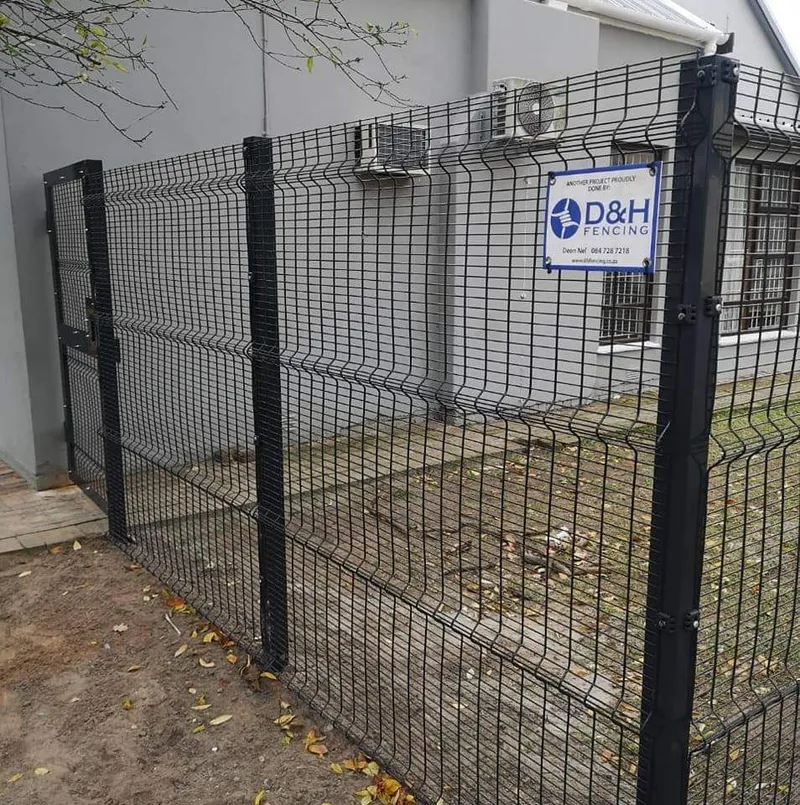
Height is the single biggest driver of material cost. Standard clearview mesh fencing in Cape Town is most commonly installed at 1.8m, with 1.5m, 2.1m, and 2.4m all available depending on the security level required.
- Each additional 300mm of height requires more steel mesh, longer Y-posts, deeper post holes, and more concrete per foundation.
- Taller fences cost meaningfully more per linear metre — not double, but enough that paying for 2.4m when 1.8m would have done the job is a costly mistake.
- 1.8m is the residential default because it balances security, visual impact, and material cost. Most Cape Town homes have no reason to go higher.
- 2.1m and 2.4m are common on commercial and industrial sites, especially when paired with electric fencing on top.
Match the height to the actual threat you are securing against. Overspecifying is the easiest way to inflate a project budget unnecessarily. There is also a planning dimension to the decision — 1.8m is the point at which the National Building Regulations stop treating a boundary fence as minor building work, which we explain alongside the design ideas for each fence height.
Galvanised vs Powder-Coated: How Coating Affects Cost and Lifespan
The coating you choose changes both the upfront installed cost and the lifespan of the fence. There is no single "right" answer — it depends on where you live and what you want the fence to look like.
Galvanised
- Standard hot-dip galvanising bonds zinc directly to the steel.
- Lower upfront cost than powder-coated.
- Silver metallic finish — utilitarian rather than decorative.
- Excellent durability inland; salt air shortens its life on the coast.
- Typical lifespan: roughly two decades plus with normal conditions.
Powder-Coated
- Galvanising plus a baked polymer colour layer (commonly forest green, black or grey).
- Higher upfront cost because of the additional process and materials.
- Far better protection against salt corrosion and UV.
- Best choice for properties within 5km of the coast and for owners who want the fence to disappear visually into landscaping.
- Typical lifespan: noticeably longer than bare galvanised in equivalent conditions.
For properties on the Atlantic Seaboard and along the False Bay coastline, powder-coated or dual-coated (galvanised plus powder-coat) is the sensible long-term choice — the salt air eats unprotected steel surprisingly fast. For inland areas like Paarl or the Northern Suburbs, standard galvanised performs perfectly well and keeps the upfront cost lower. Our detailed coating comparison guide covers this trade-off in depth.
Get Your Free Fencing Quote
Every property is different. The only way to know what your fence will cost is to have us walk the site and provide a written, line-item quote.
How Property Size and Shape Affect Total Cost
Total project cost scales with the length of fence line — but not in a straight line. Two properties with the same perimeter can come in at very different totals depending on shape and complexity.
- Linear metres of fencing is the foundation of any quote. The longer the run, the higher the material and labour cost.
- Number of corners and direction changes adds cost. Every corner needs additional posts, fittings, and labour to set out correctly.
- Irregularly shaped plots (pan-handle stands, curved boundaries, off-square corners) cost more than a simple rectangular run of the same length.
- Property type influences expectations: a townhouse perimeter is short and usually simple; a smallholding or commercial yard is long and often complex, with multiple gate points and service access.
If you need gates installed, fencing along an internal subdivision, or additional security features, those scope items live on separate quote lines and add to the total. Our fencing cost calculator is useful as a rough orientation tool, but it cannot replace a site visit.
Site-Specific Factors That Push the Quote Up or Down
This is where two superficially similar jobs end up at very different totals. The factors below are the ones that most consistently move a final figure away from any "average".
1. Terrain and Ground Conditions
Rocky or steeply sloping ground requires more labour and sometimes specialised equipment. Properties on the slopes of Table Mountain, in parts of Constantia, or on hillside plots in Stellenbosch typically attract a meaningful terrain premium on labour. Sandy soil is easier to dig but may need wider or deeper concrete foundations for post stability. Clay soils behave differently again. The site visit is when we can tell which of these applies to you.
2. Site Access
If our team and materials can park alongside the fence line, the job is straightforward. If everything needs to be carried by hand from a distant gate, through a garden, or up a flight of steps, labour goes up. Narrow lanes, locked estate gates that need scheduled access, and limited working hours all add hours to a project.
3. Gates and Access Points
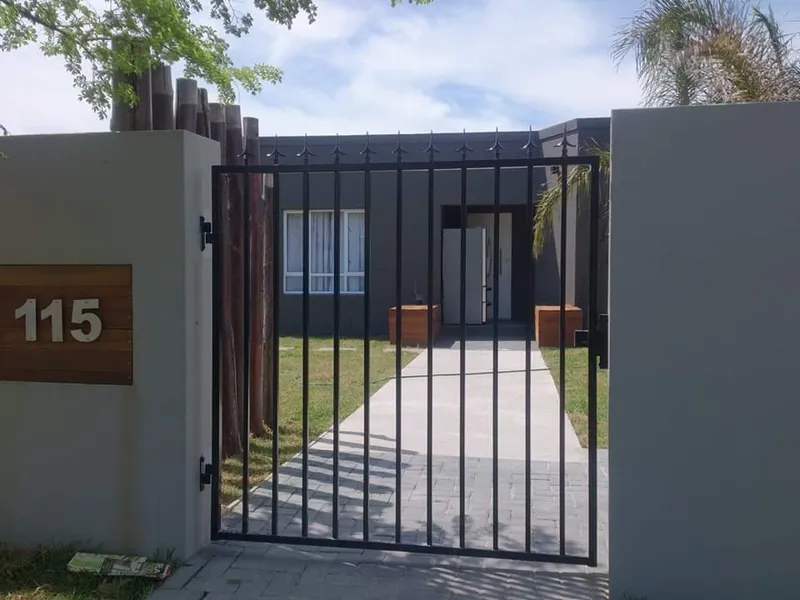
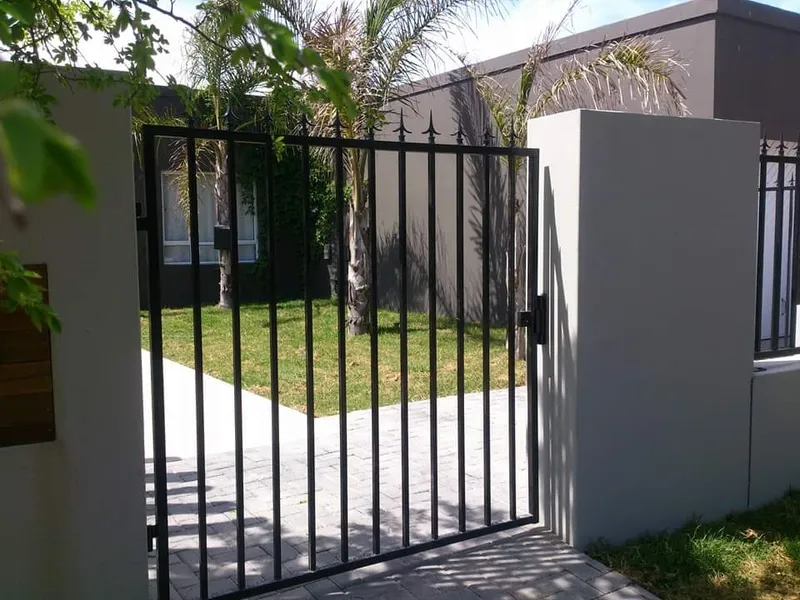
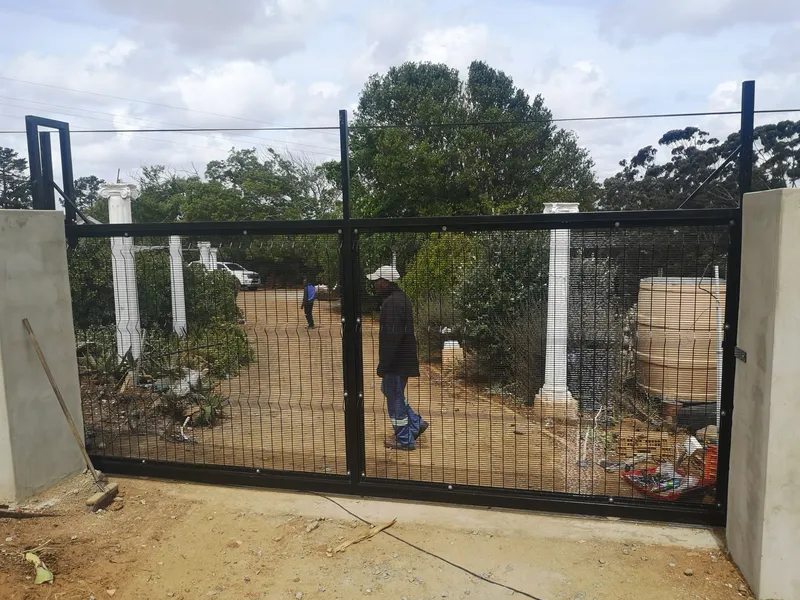
Every gate is effectively its own mini-project. A standard pedestrian gate is a relatively modest add-on; a sliding driveway gate with motor, remotes, safety beams, and intercom integration is a much bigger line item. Our gate installation service covers the full range — manual swing gates, sliding gates, automated systems with intercom integration — and each variant has its own cost profile.
4. Old Fence Removal and Site Preparation
If your boundary currently has wire, panels, palisade or a precast wall that needs to come down first, demolition and disposal becomes part of the scope. Precast walls in particular take significantly more labour to remove than a wire fence, and the broken concrete and old footings then have to be hauled off-site — a rubble removal service can clear the builders rubble so the new fence line is ready to work. Worth agreeing up front who is arranging that, because it is a common gap between a demolition quote and a fencing quote. Our fence repair team can assess whether your existing fence can be refurbished rather than replaced — sometimes that is the cheaper route by a long margin.
5. Number of Corners and Direction Changes
Each corner means an additional post, additional fittings, additional concrete, and time spent setting out angles correctly. Properties with many boundary changes will cost more than a simple rectangular plot of the same total perimeter.
6. Location Within Greater Cape Town
Where the project sits affects transport and logistics. Properties in the central City Bowl, Southern Suburbs, Atlantic Seaboard and the Northern Suburbs typically fall within the standard service area. Projects further afield — Stellenbosch, Paarl, Somerset West and Strand — may carry a transport component depending on where the contractor is based and how many site visits the project requires.
7. Additional Security Features
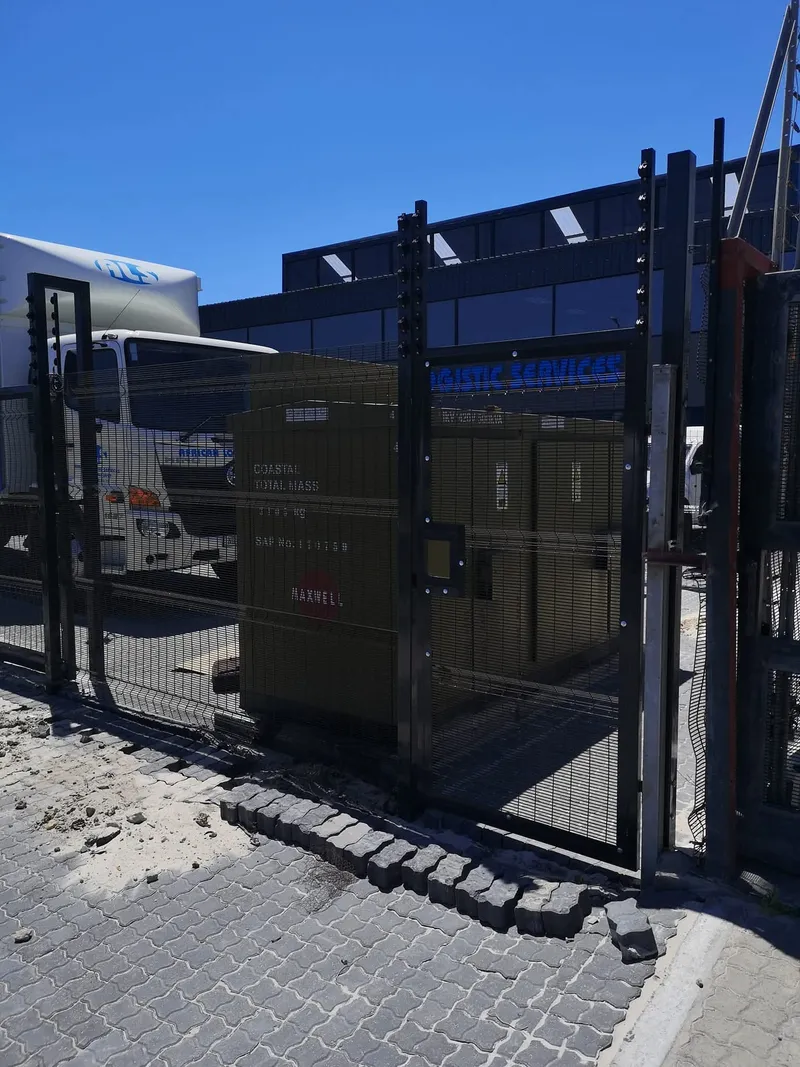
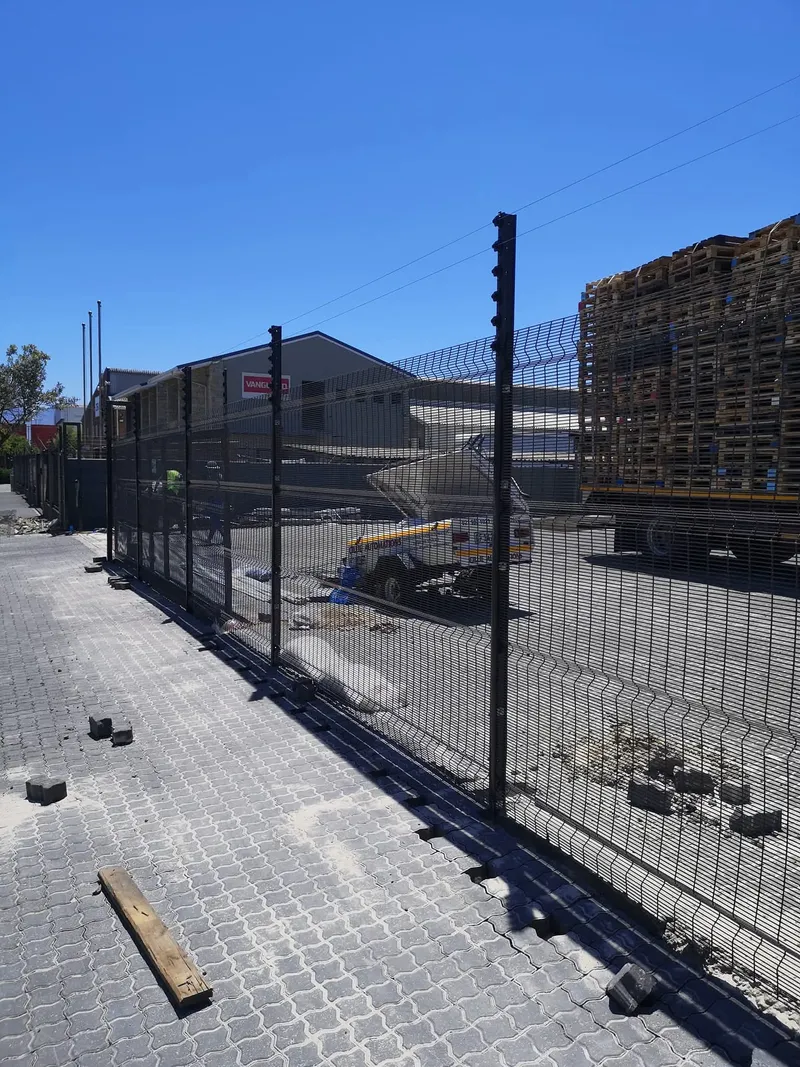
Add-ons such as razor wire toppings, anti-dig plates, electrified strands, or integration with existing alarm or beam systems all add to the scope. They are usually worth specifying upfront so the fence is engineered to carry them.
Find Out Exactly What Your Fence Will Cost
Skip the guesswork. Request a written, line-item quote based on an on-site assessment of your property.

How Clearview Fencing Compares to Other Fencing Options
Without quoting numbers that will mislead, we can still place clearview fencing accurately on the cost-and-performance spectrum relative to alternatives common in Cape Town.
- Diamond mesh (chain-link): Cheapest option upfront, but a low security rating, a much shorter lifespan, and limited visual deterrent. Often false economy.
- Wooden fencing: Lower upfront cost than steel options but requires regular maintenance and replacement. Over a 20-year horizon, wooden fencing can end up costing more, not less.
- Welded mesh: A mid-tier security option, less anti-climb than 358 clearview mesh.
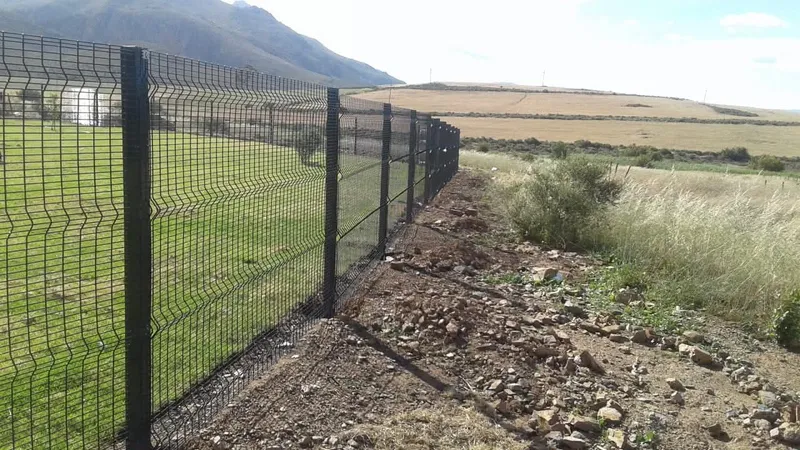
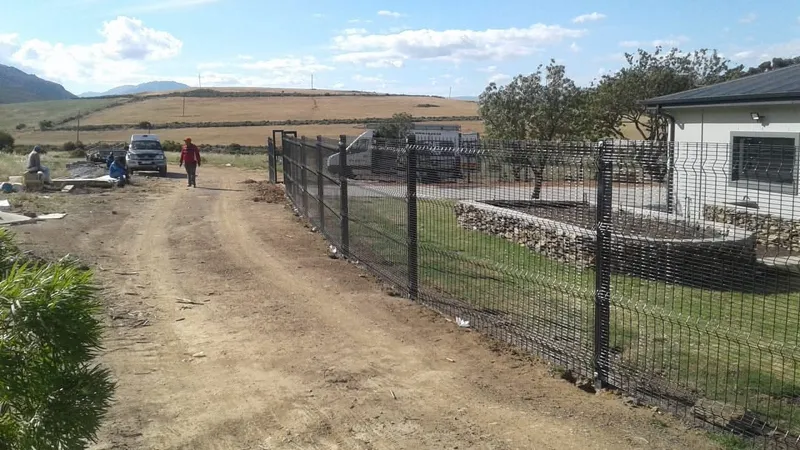
- Clearview (358 mesh): High security rating, long lifespan, see-through (which itself improves security by eliminating hiding spots), low maintenance.
- Palisade fencing: Comparable security rating to clearview but typically a higher upfront cost. Palisade is more visually imposing — a deterrent in its own right — but blocks more sightline.
- Precast concrete walls: High upfront cost, very long lifespan, but blocks visibility — which paradoxically reduces security by giving intruders cover to work behind.
- Brick / plastered walls: Highest upfront cost of the common options, longest physical lifespan, same visibility problem as precast.
Clearview fencing tends to offer one of the best cost-to-security ratios on the market, especially when you factor in lifespan and zero maintenance overhead. Our clearview vs traditional security comparison covers the security side in more depth.
What to Ask When Getting a Fencing Quote
Because there is no single rate card, the quality of a quote matters more than the headline figure. A professional fencing quote should clearly itemise:
- Fence specification — height, mesh type (look for 358 anti-climb), coating, and post type.
- Linear metres of fencing covered.
- Post spacing, post depth, and the volume of concrete per foundation.
- All fixings, connectors, and corner posts.
- Labour and installation, broken out from materials.
- Each gate as its own line item, including motors, intercoms, and safety beams where applicable.
- Old fence removal and disposal, if required.
- Site preparation and any terrain-related labour.
- Transport and delivery.
- VAT shown separately.
- Warranty terms — what is covered, for how long, and by whom.
- Payment terms in writing.
Be cautious of quotes that come in dramatically below others in the market. The most common reasons for a "cheap" quote are thinner wire gauge, inferior galvanising (the Hot Dip Galvanizers Association sets the standards for what proper coating actually looks like), shallower post depth, or less concrete per foundation. None of these are visible the day the fence is installed; all of them show up two or three years later. Our installation guide walks through what good workmanship looks like in practice.
Ready to Get Started?
Contact us for a transparent, itemised quote with no hidden costs and no per-metre fiction.
Practical Ways to Manage Your Fencing Budget
You can still make sensible choices to keep the project cost reasonable without compromising the result:
- Match the height to the actual security requirement. Do not pay for 2.1m if 1.8m solves the problem.
- Choose galvanised for inland properties. More than 5km from the coast, the salt-air case for powder-coating weakens significantly.
- Clear the fence line before installation. Removing vegetation, garden debris, and obstacles in advance saves labour hours.
- Bundle fencing and gates together. One contractor visit is almost always cheaper than two.
- Plan upgrades into the initial scope. If you intend to add electric fencing later, have the brackets installed during the original fencing job rather than paying for a second visit.
- Get more than one quote. Comparing three properly itemised quotes is the fastest way to learn what is reasonable for your specific site.
Why We Do Not Publish Prices on This Site — and What to Do Instead
The variability between projects is large enough that any single published number would mislead more readers than it would help. A 1.8m galvanised clearview fence on a flat suburban boundary in Bellville and the same nominal specification on a rocky slope in Constantia with three corners and an old precast wall to demolish are not the same job. Anyone publishing a flat rate is either describing the easiest possible version of the job, or relying on you not noticing when their final invoice diverges from the website figure.
The path to a real number is straightforward: book a free, no-obligation site visit. We measure the boundary, note the terrain, count the corners, assess access, identify removal work, and listen to what you actually want from the fence. You receive a written, line-item quote — usually within 24 to 48 hours — that you can compare directly against quotes from other contractors. No surprises on installation day, no scope drift, no hidden extras.
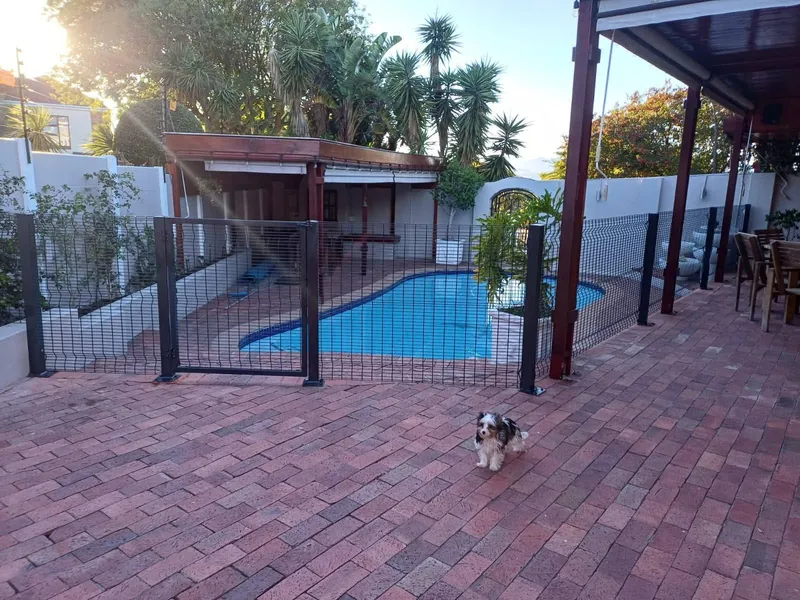
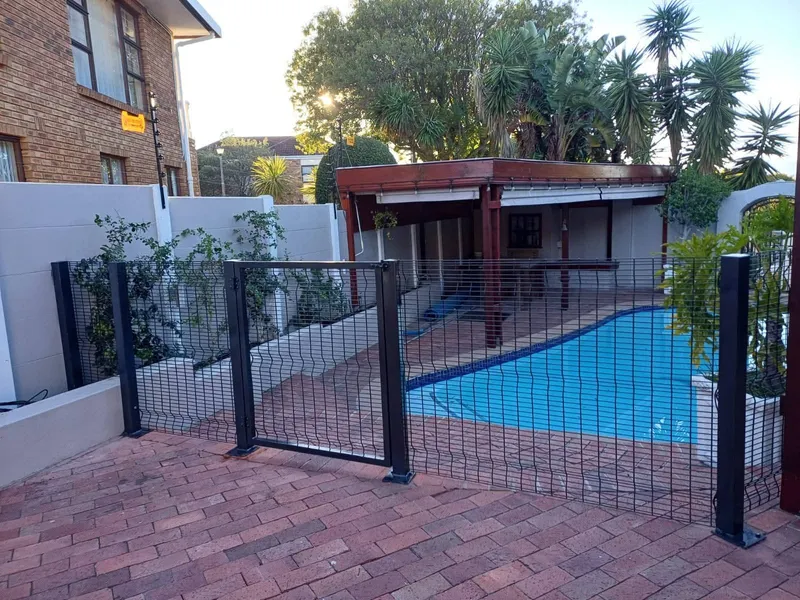
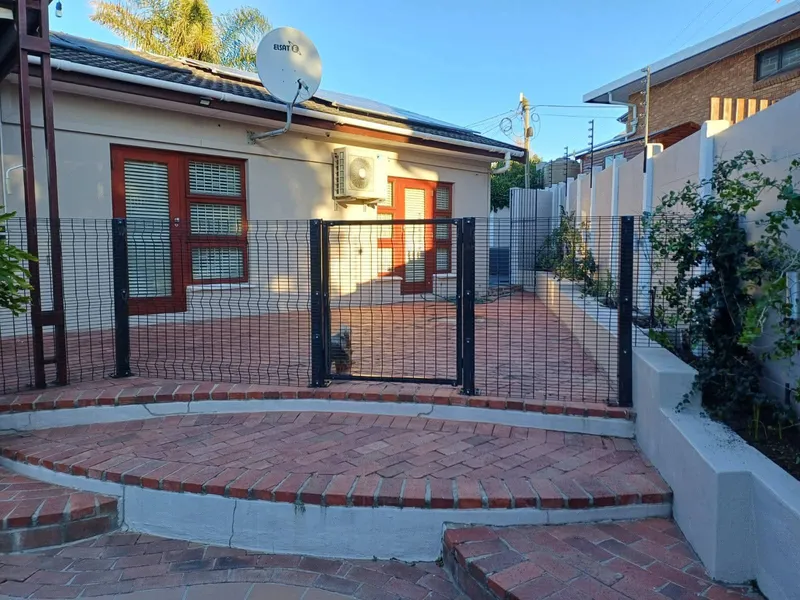
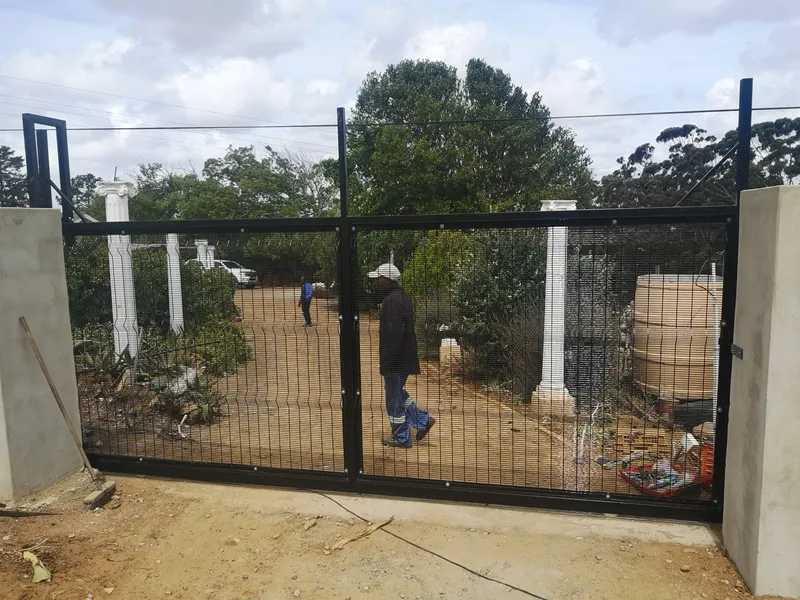
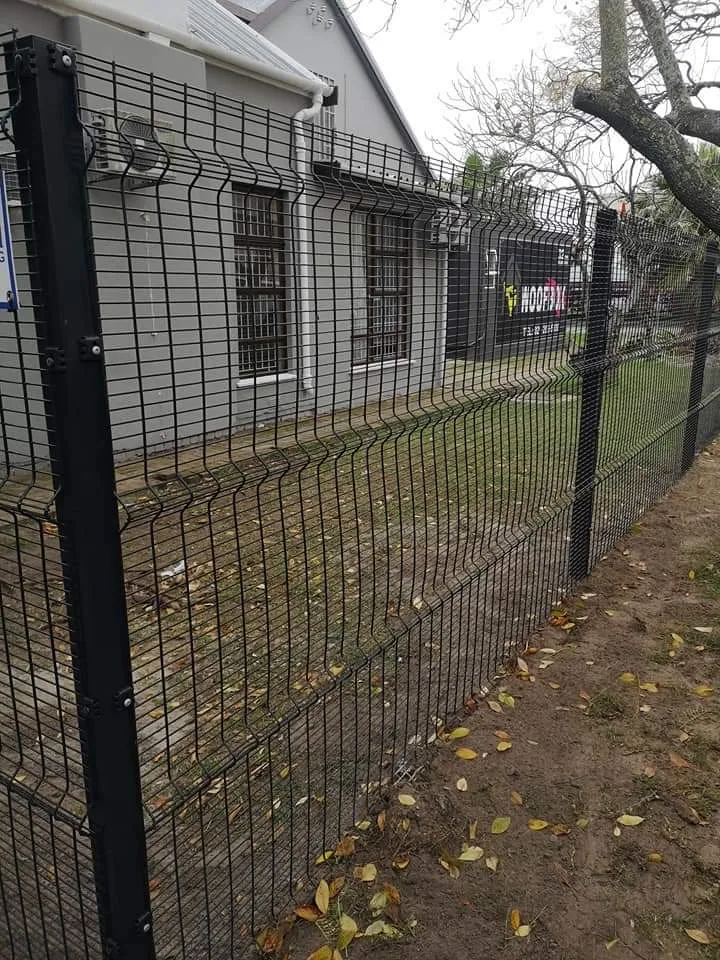
Ready to find out exactly what your project will cost? Get a free, no-obligation quote from our team, or try our online cost calculator for a rough orientation figure. You can also browse our project gallery to see examples of completed installations across Cape Town — the variety of properties is, more than anything, why there is no single price.