Choosing the Right Type of Security Fencing in Cape Town
Most Cape Town property owners arrive at the same crossroads: the boundary needs securing, and suddenly there are half a dozen fencing types to choose between — clearview mesh, palisade, electric, razor wire, welded mesh, or a solid precast wall. They are not interchangeable. Each sits at a different point on the scale of security, visibility, upkeep and cost, and the option that is perfect for a townhouse in Rondebosch can be the wrong call for a smallholding in Philadelphia or a commercial yard in Epping.
This guide compares every common security fencing option side by side — what it is, how well it actually resists a determined intruder, what it costs to live with over twenty years, and the kind of property it suits best. No flat rate cards, no marketing spin — just the trade-offs that matter when you are deciding what goes around your home or business.
The Main Security Fencing Types at a Glance
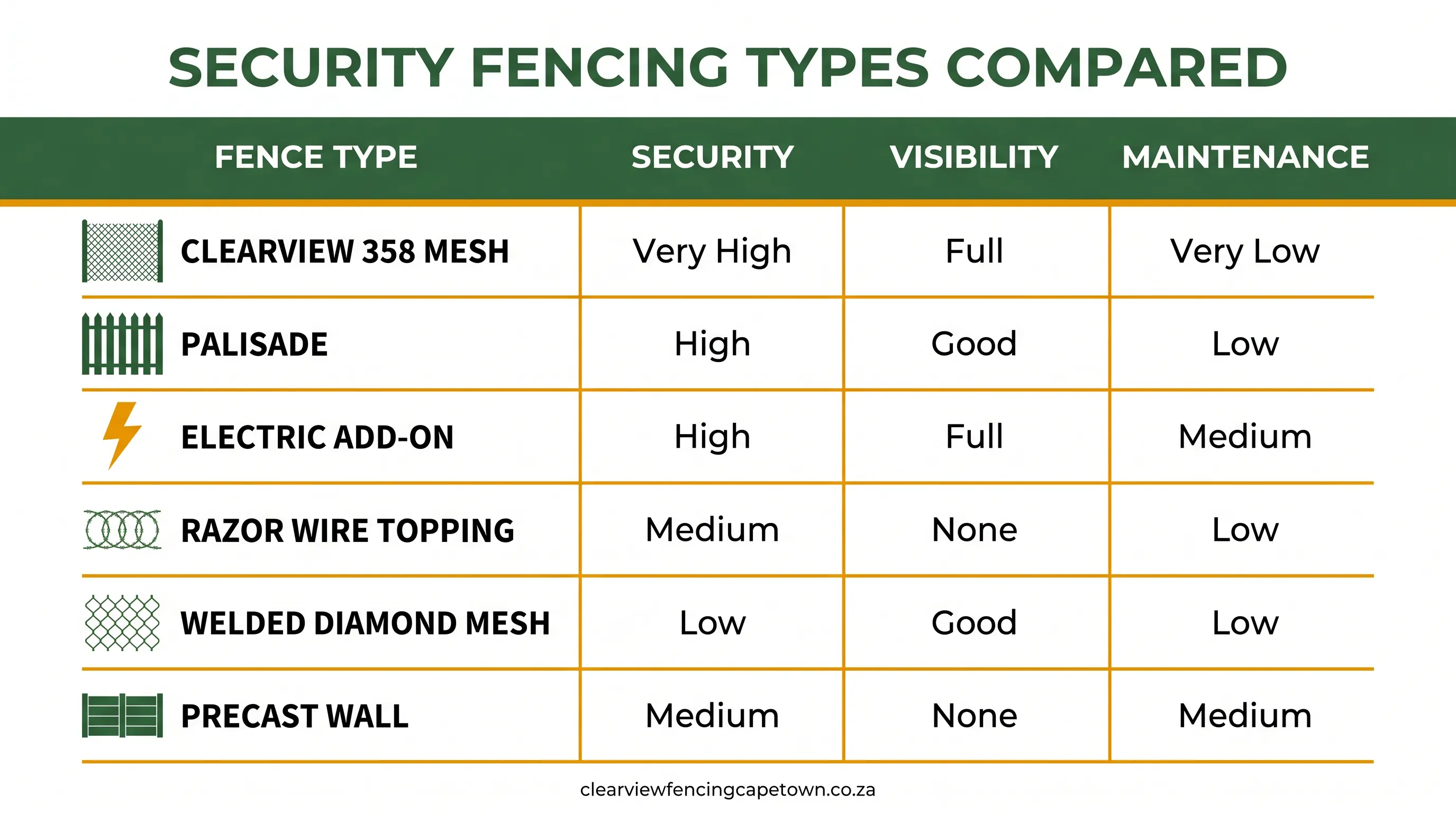
Before the detail, here is the short version. Six options dominate Cape Town boundaries, and they line up roughly like this from highest see-through security to lowest:
- Clearview (358 mesh) — highest anti-climb, anti-cut rating with full visibility.
- Palisade — strong, imposing deterrent; the most popular security fence in South Africa.
- Electric fencing — an active deterrent, almost always added on top of another barrier rather than used alone.
- Razor wire / concertina — a topping that hardens a wall or fence; not a standalone fence.
- Welded & diamond mesh — budget demarcation and light security.
- Precast walls & masonry — privacy and mass, but they trade away the visibility that good security relies on.
1. Clearview (358 Mesh) Fencing
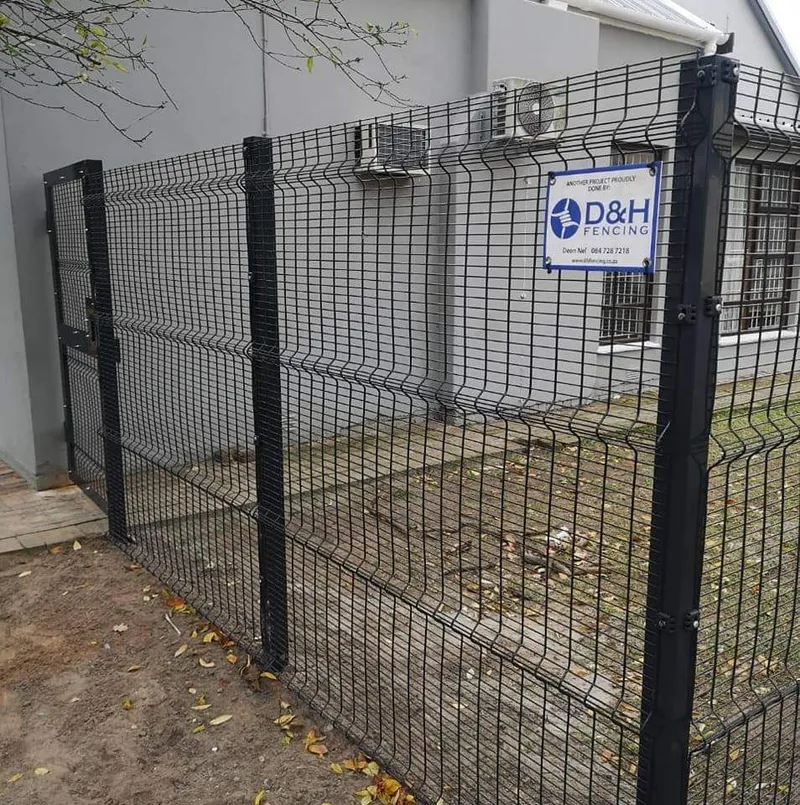
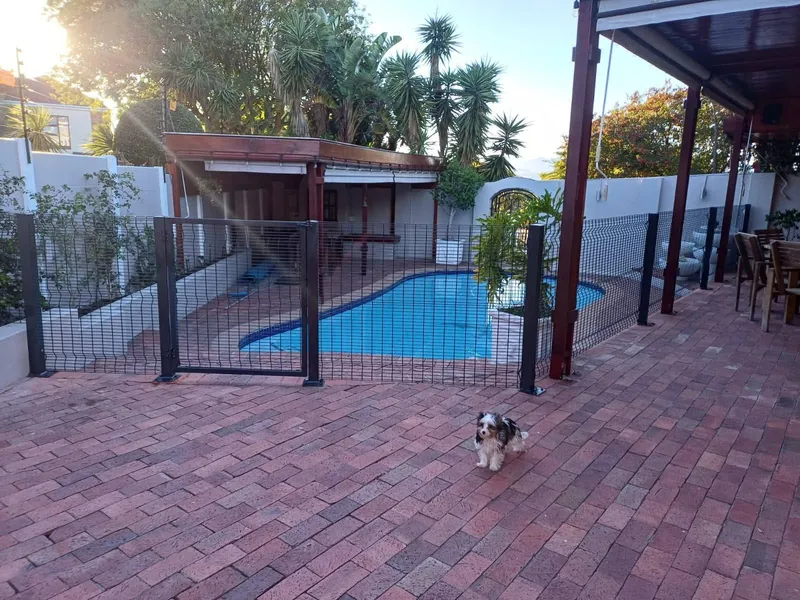
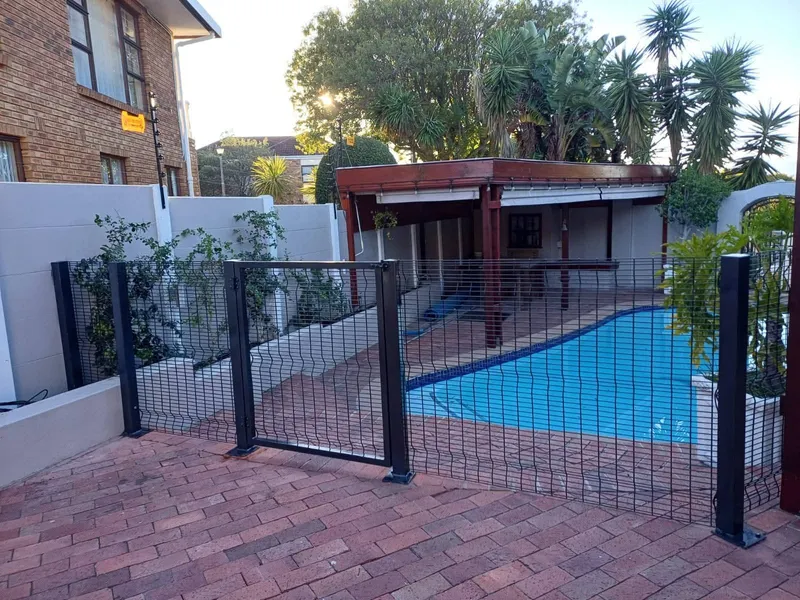
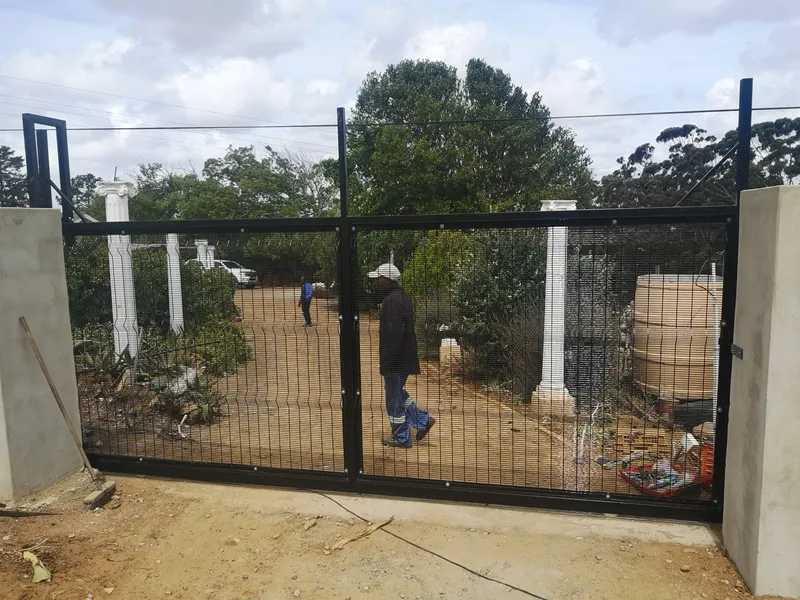
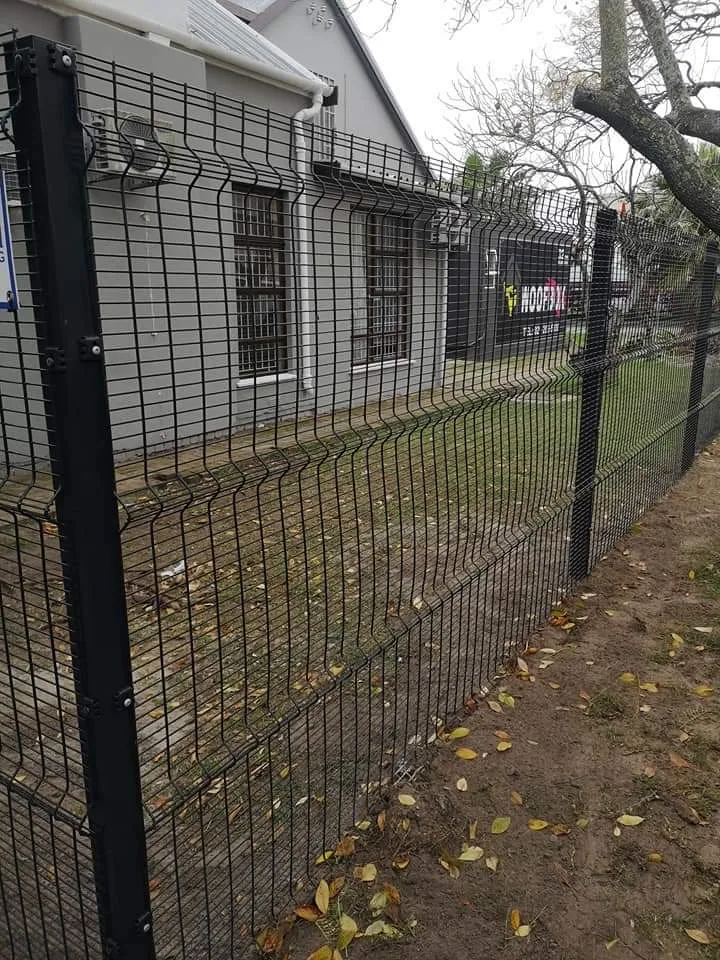
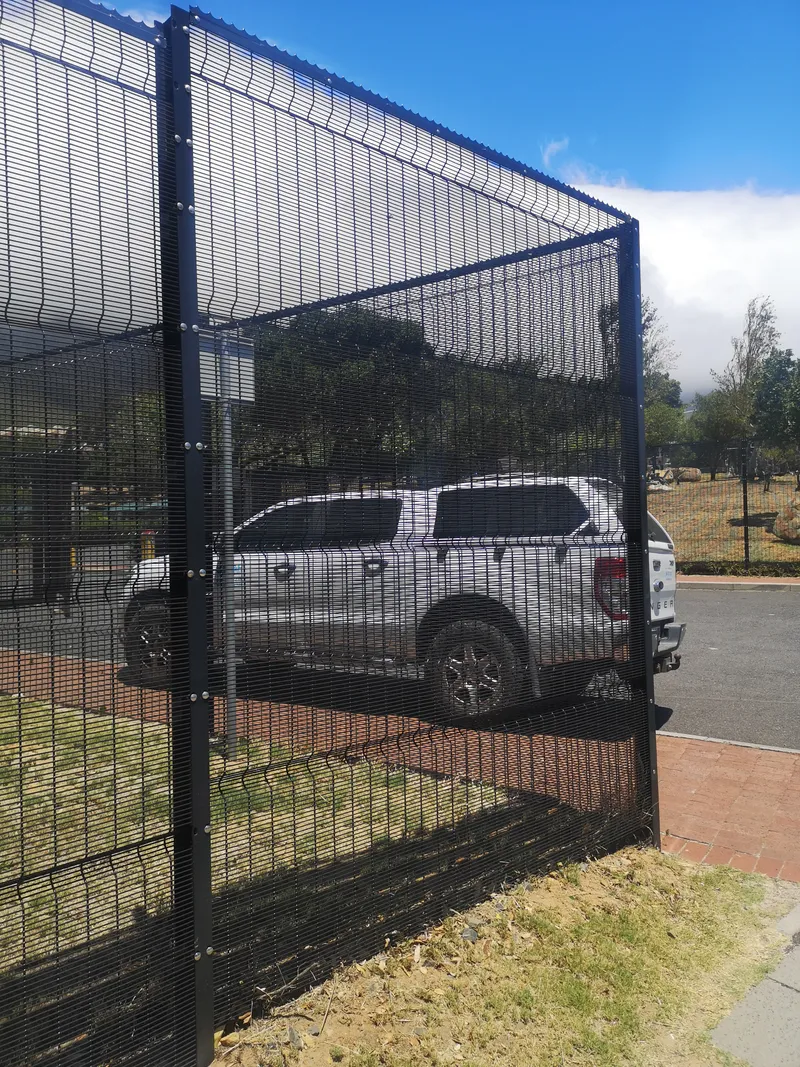
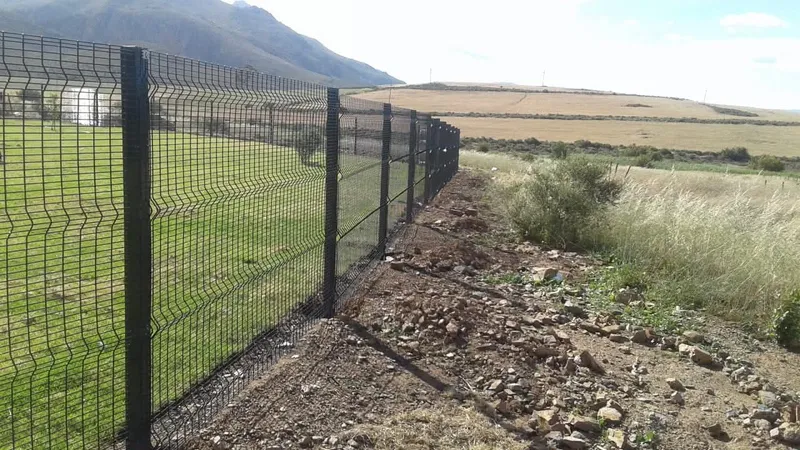
Clearview mesh fencing is built from 358 mesh — a name that comes from its imperial aperture code of 3″ × 0.5″ × 8 gauge, which works out to roughly 76.2 mm × 12.7 mm openings formed from thick 8-gauge (about 4 mm) wire. Those numbers are the whole point. The vertical gap of 12.7 mm is too tight to push a finger through or get a toe-hold on, and it leaves no room to seat a pair of bolt-cutter jaws around a single wire.
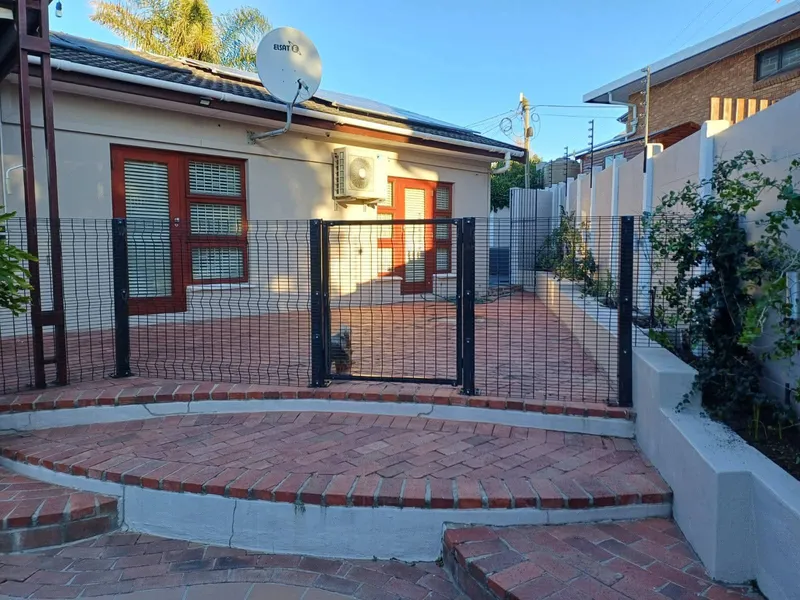
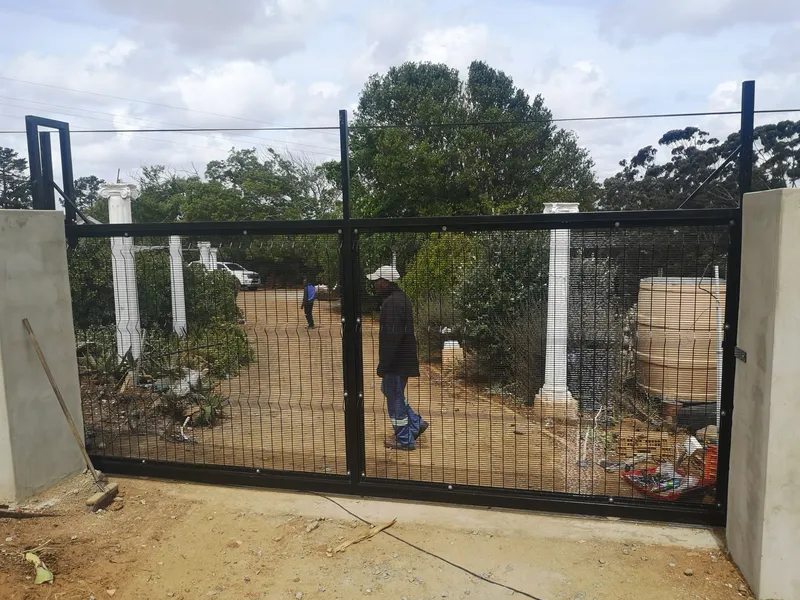
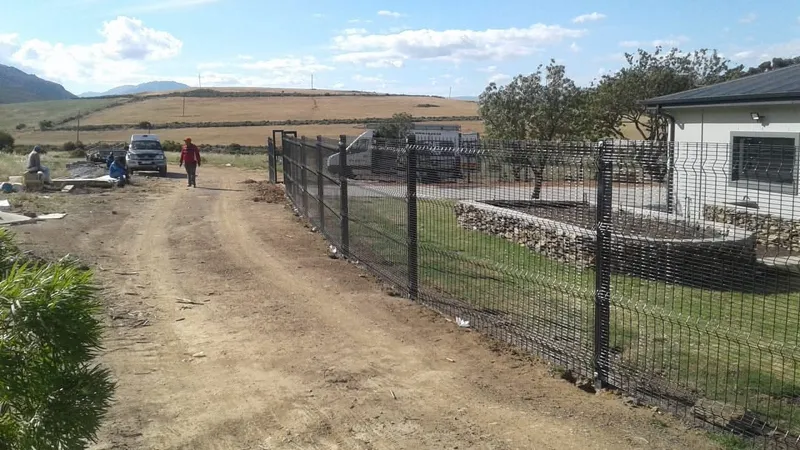
The result is a fence that is genuinely hard to climb and hard to cut by hand, while staying almost transparent from a few metres back. That see-through quality is a security feature in itself — there is nowhere for an intruder to hide behind it, and your neighbours and patrols can see the boundary clearly. It is commonly installed at 1.8 m, 2.1 m and 2.4 m, with taller panels for commercial sites. If you want the detail on how it holds up against an angle grinder and hand tools, our analysis of whether clearview fencing can be cut goes deeper.
Best for: residential perimeters, schools, estates and commercial premises where you want maximum security without losing the view or boxing the property in.
2. Palisade Fencing
Palisade fencing is South Africa's most familiar security fence: vertical steel pales bolted to horizontal rails, finished with pressed spikes or triple-point tops. It is imposing by design — the spiked profile is a clear visual warning, and cutting or bending the pales generally takes power tools. Standard heights again run 1.8 m to 2.4 m, with three rails on the taller panels for rigidity.
Palisade and clearview are often shortlisted against each other. Palisade wins on visual deterrence and is frequently the lower upfront cost; clearview wins on anti-climb and anti-cut performance for the same height, and keeps more of the view. The wider gaps between palisade pales give a determined intruder more purchase than 358 mesh does. Our clearview versus traditional security comparison weighs the two in more depth.
Best for: properties that want a strong, visible deterrent at a competitive price, and owners who prefer the classic look of steel pales.
3. Electric Fencing
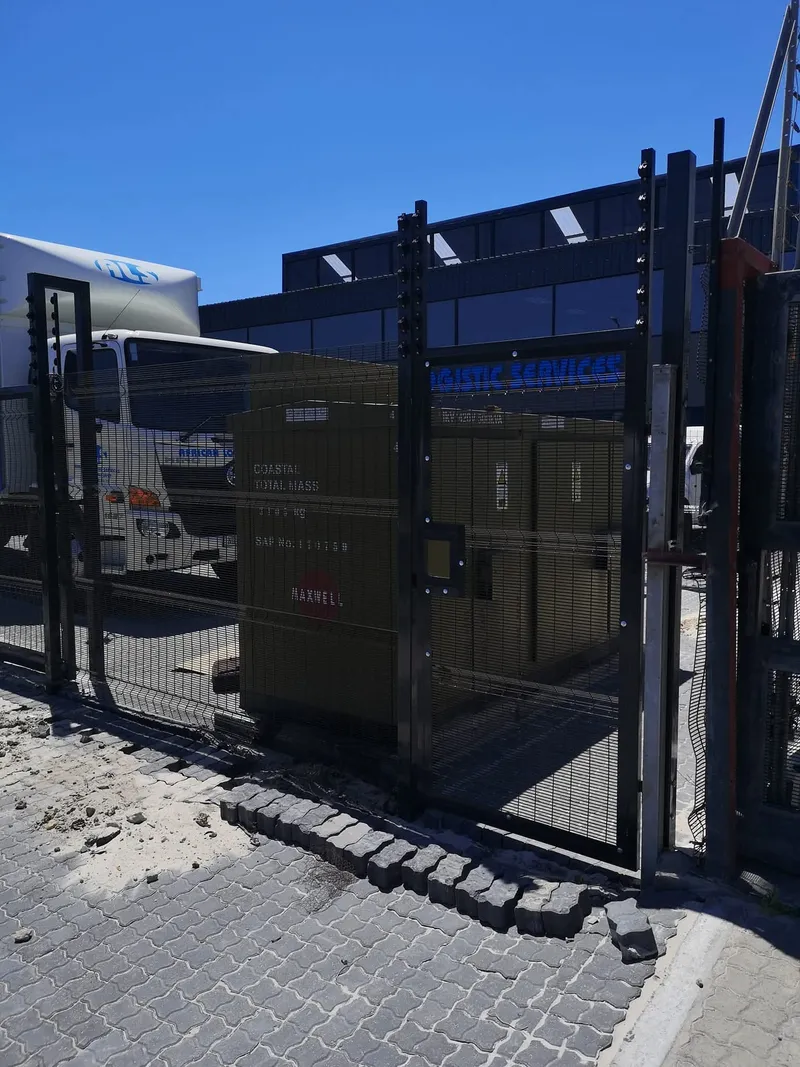
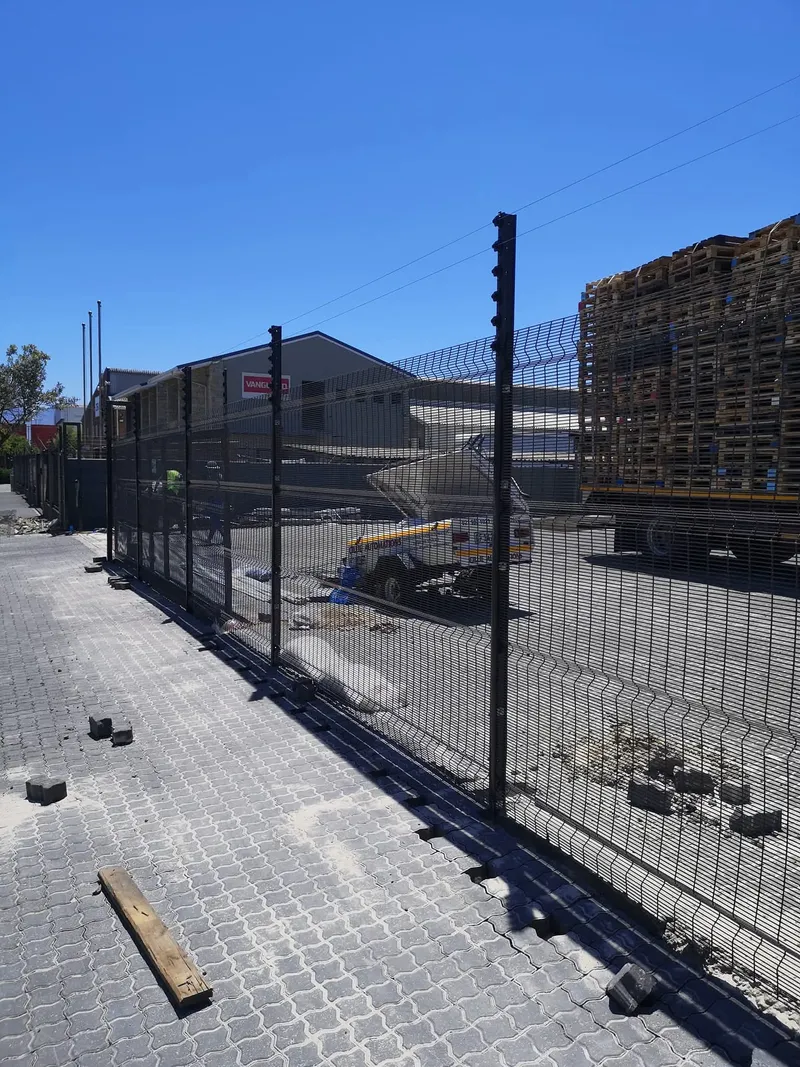
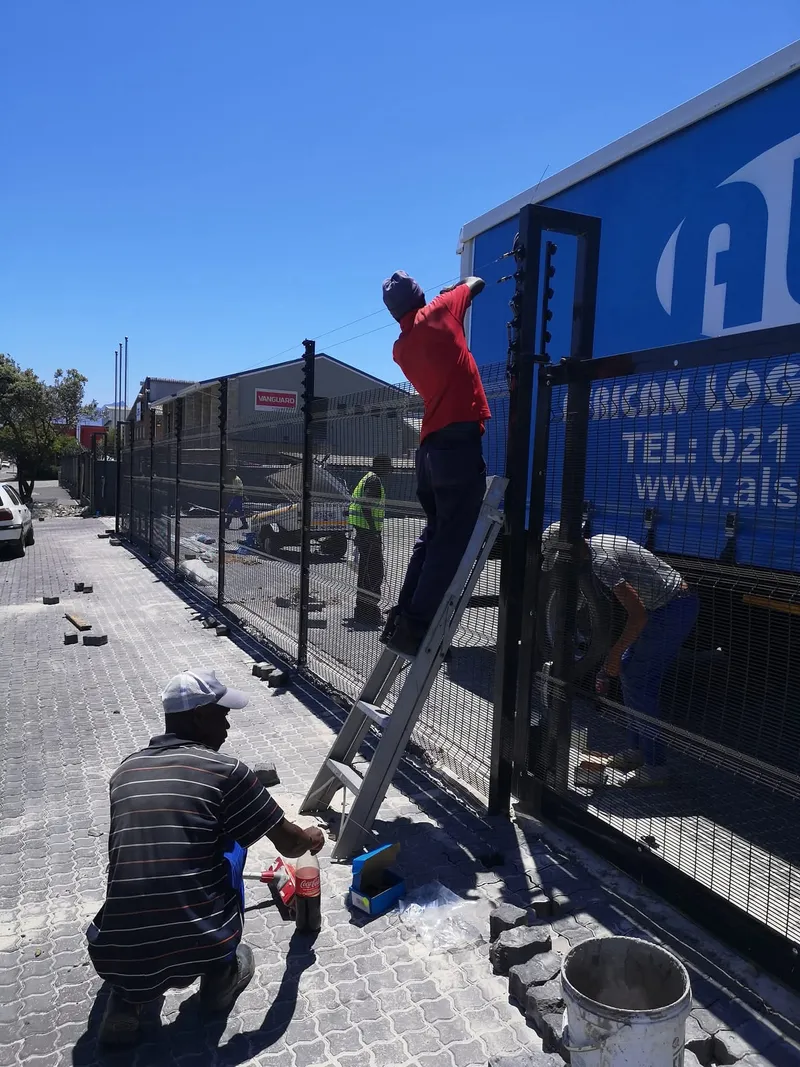
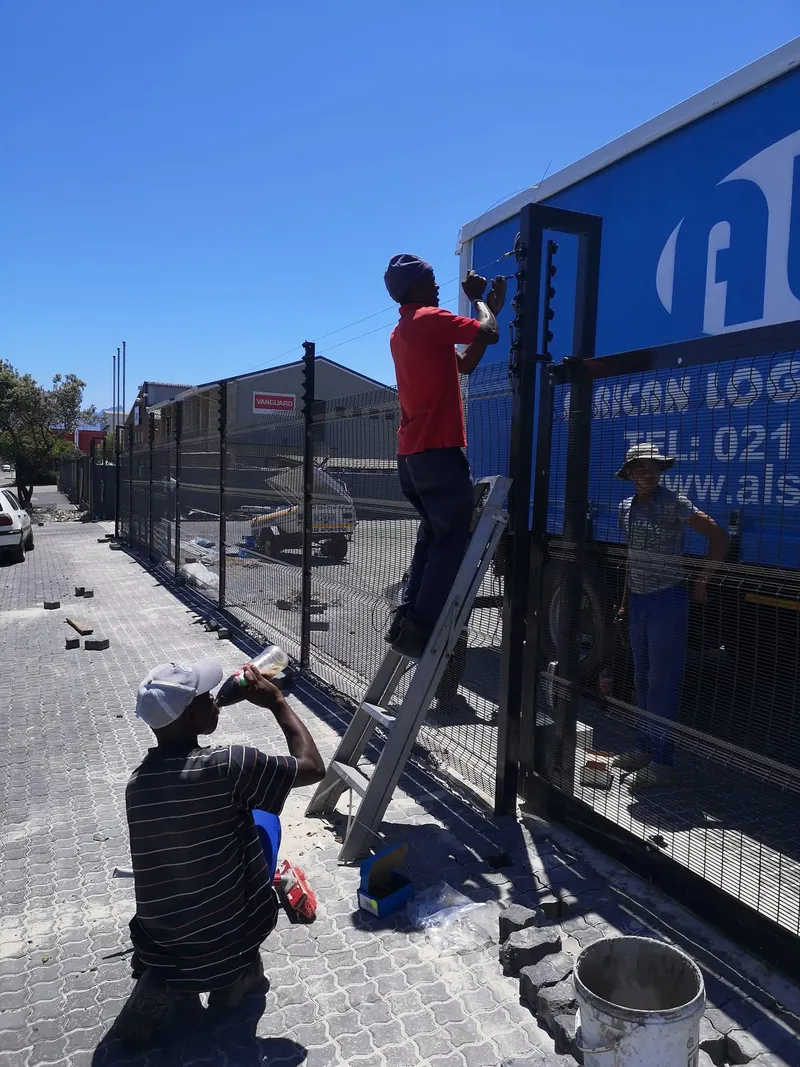
Electric fencing is an active deterrent rather than a passive barrier, which is why it is almost always installed on top of a wall, palisade or mesh fence rather than on its own. In South Africa it is tightly regulated for safety. Energizers must comply with SANS 10222-3, which sets the safety limits on how much energy a pulse may carry, how high the voltage may go and how often it may fire. The exact figures sit inside the standard itself, so ask your installer to confirm the rating of the energizer being fitted rather than relying on a number quoted online. It is engineered to deliver a sharp, memorable shock — a deterrent, not a lethal weapon. The technical limits are explained well by the SANS 10400 electric fences guide.
There is a legal catch that catches out a lot of Cape Town buyers and sellers: a valid Electric Fence System Certificate of Compliance must be in place whenever a property with an electric fence changes hands (for systems where the ownership change happens after 1 October 2012), and whenever the system is installed, extended or altered. Only a registered Electric Fence System Installer may issue it. The Electrical Contractors’ Association sets out what every property owner needs to know about electric fences.
Best for: adding an extra active layer on top of an existing boundary — particularly effective paired with clearview mesh or palisade.
4. Razor Wire & Concertina
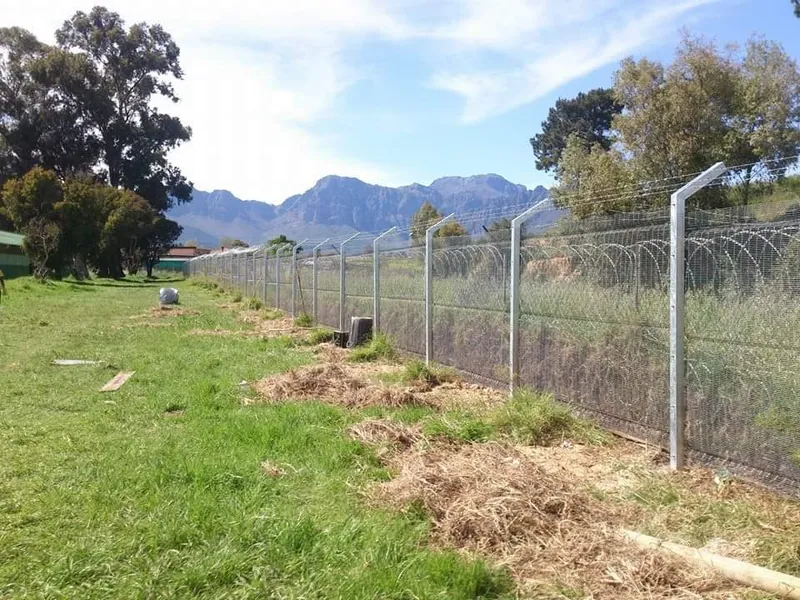
Razor wire and concertina come in two main forms: concertina, the expandable 3D coils used on high-security and industrial perimeters, and flat-wrap, the lower-profile circular coils that look tidier on an urban wall. Both are a laceration deterrent that slows and discourages climbing.
The key thing to understand is that razor wire is a topping, not a fence. It hardens the top of a wall, palisade or mesh line; it offers no barrier, privacy or screening on its own. Treat it as an enhancement to a primary boundary rather than the boundary itself.
Best for: commercial and industrial sites, or any wall or fence where you want to make the top edge genuinely unpleasant to scale.
5. Welded Mesh & Diamond Mesh
Standard welded mesh and diamond mesh (chain-link) sit at the budget end of the security scale. Their wider apertures and thinner wire make them easier to cut or climb than 358 clearview or palisade, so on their own they are best thought of as demarcation and light security rather than a serious deterrent.
One point of confusion worth clearing up: high-security 358 clearview is itself a welded-mesh product — the difference is the tight aperture and heavy wire. Ordinary garden or industrial weldmesh is a very different animal. Lighter mesh is often upgraded with a razor-wire topping or used as infill behind a stronger primary line.
Best for: boundary demarcation, sports grounds, industrial yards, stock control and tight budgets where high security is not the priority.
6. Precast Walls & Masonry
A solid precast or masonry boundary wall gives you privacy, noise reduction and real mass. But there is a security trade-off that often gets overlooked: a solid wall blocks sightlines in both directions. Once an intruder is over it or behind it, they are hidden from the street, from neighbours and from passing patrols, with cover to work undetected.
This is a core principle of Crime Prevention Through Environmental Design (CPTED) — the idea of natural surveillance, where the safest boundaries let occupants and passers-by “see and be seen.” The International CPTED Association is the recognised authority on this thinking. It is not that walls make you unsafe — they offer genuine privacy and a solid barrier — but they sacrifice the visibility that see-through fencing relies on, which is why many owners pair a wall with electric topping and cameras, or choose mesh or palisade instead. If you are building or raising a wall, note too that boundary-wall height is regulated; the SANS 10400 boundary walls and fences rules cover when municipal approval is needed.
Best for: owners who prioritise privacy and noise screening, ideally combined with an active deterrent to offset the loss of natural surveillance.
Not Sure Which Fence Suits Your Property?
The right choice depends on your boundary, your threat level and your budget. We will walk the site and recommend the best fit — no obligation.
How to Choose the Right Security Fence
With the options on the table, the decision comes down to a handful of practical questions about your specific property.
Match the fence to the actual threat
Over-specifying is the easiest way to waste money. A quiet suburban garden does not need the same boundary as a commercial yard storing high-value stock. Be honest about the risk you are securing against, then choose the lowest-fuss option that genuinely covers it.
If you are still weighing the options rather than narrowing them down, our complete South African fence buying guide works through the decision from the beginning — including the non-security fencing types this article does not cover.
Protect your sightlines
Wherever security is the goal, see-through fencing — clearview or palisade — usually beats a solid wall, because visibility removes the hiding places that intruders depend on. If privacy is also essential, a layered approach (a lower wall with see-through fencing or electric topping above it) often works better than a tall solid wall alone.
Plan for Cape Town's salt air
Coastal corrosion is real and it is expensive. Within a few kilometres of the sea, bare steel degrades fast. Hot-dip galvanizing protects steel sacrificially — the zinc corrodes in preference to the steel beneath — and for aggressive coastal conditions a duplex system (galvanizing plus a powder-coat topcoat) lasts substantially longer. The Hot Dip Galvanizers Association of Southern Africa documents why. Our guide to the best coating for clearview fencing covers the galvanised-versus-powder-coated decision for local conditions.
Think in twenty-year terms
The cheapest fence to install is rarely the cheapest to own. A budget mesh that needs replacing in eight years, or a wooden fence that needs staining every other winter, can cost more over two decades than a maintenance-free steel option. Factor lifespan and upkeep into the comparison, not just the install price — our breakdown of what drives clearview fencing cost explains how to read a quote properly.
Which Security Fence Is Right for Your Property?
As a rough guide for Cape Town properties:
- Suburban home, security-first: clearview (358) mesh, optionally with electric topping for an active layer.
- Home wanting a strong visible deterrent on a budget: palisade, in galvanised or powder-coated steel.
- Coastal property: clearview or palisade in a galvanised-plus-powder-coated (duplex) finish to beat the salt air.
- Commercial or industrial site: high-security clearview or palisade, frequently topped with razor wire and electric strands.
- Smallholding or large perimeter: welded mesh for the long runs, upgraded to clearview or palisade at vulnerable points and gates.
- Privacy priority: a precast wall, ideally combined with electric topping or cameras to restore some natural surveillance.
Most real-world boundaries end up combining types — a mesh or palisade line, a solid wall on the street frontage, electric on top, and the right gate installation at the access points. The art is matching each section to its job. For the full picture on the highest-security option, the complete clearview fencing guide walks through specifications, heights and coatings, and the project sizing calculator helps you scope the metres and posts before you request a quote.
Get Expert Advice for Your Boundary
Tell us about your property and we will recommend the security fencing type that fits — with a written, itemised quote and no pressure.